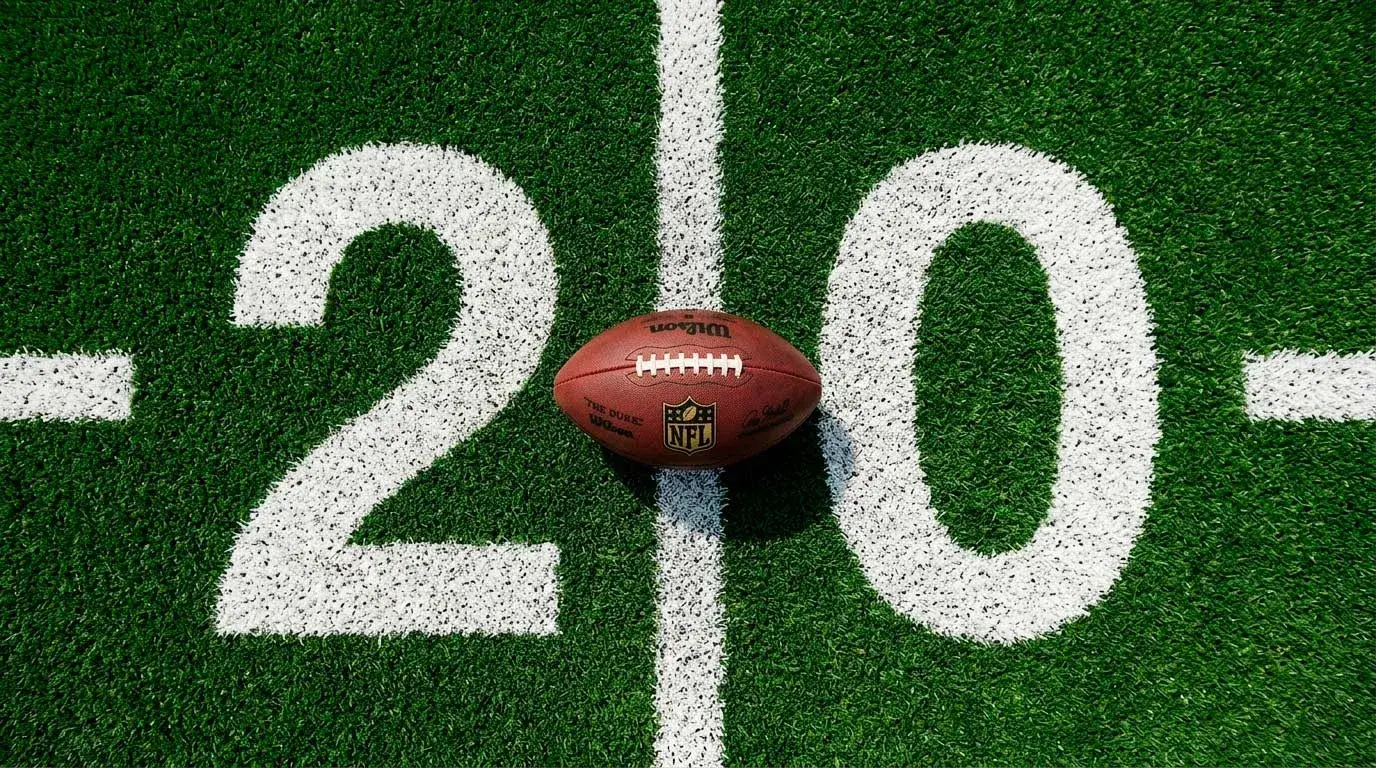


In 2026, the NFL scheduled a record nine international games, with three in London split between Tottenham Hotspur Stadium and Wembley. For most UK bettors, these are the only NFL games they can attend in person, and the atmosphere transforms what is normally a late-night television sport into a live, visceral experience. The record attendance at a London Game stands at 86,651—Jaguars versus Patriots at Wembley in October 2024—and over 6 million UK viewers watched the London Games on television or online during the 2025 series.
But London Games are not just a spectacle. They create a unique betting environment with specific edges that do not exist in any other NFL fixture. Designated “home” teams playing 5,000 miles from their actual home, jet lag affecting both squads asymmetrically, and scheduling quirks before and after the London trip all produce angles that the standard betting market does not always price correctly.
The “Home” Team Disadvantage at London Games
Every London Game has a designated home team and a designated away team. The distinction affects which team chooses its uniform, calls the coin toss, and occupies which sideline. In practice, it means almost nothing. Neither team has a genuine home-field advantage. Over 6 million viewers tuned in for the 2025 London series, and the crowd in the stadium is overwhelmingly neutral—a mix of UK fans supporting individual players or franchises they follow from afar, not a partisan home crowd creating the noise and intensity that fuels real home-field advantage.
The betting market typically builds 1-2 points of home-field advantage into standard NFL spreads. For London Games, that adjustment should be close to zero. Some bookmakers partially account for the neutral venue, but others apply a reduced home-field bump of 0.5-1 point to the designated home team. When that happens, the “away” team is getting a small but measurable gift in the spread.
I track this explicitly. Before every London Game, I compare the spread to what my model would produce on a neutral field. If the designated home team is favoured by 3 and my neutral-field projection says the true line should be 1.5, the away side of the spread offers value. This edge is small and does not appear in every game, but over the ten London Games I have analysed in detail, the away-designated team has covered at a rate that exceeds break-even.
Jet Lag and Travel Impact on NFL London Games
Both teams fly across the Atlantic, but the impact is not symmetrical. Teams based on the West Coast travel eight time zones; East Coast teams travel five. That three-hour difference in jet lag is physiologically significant. Research on transmeridian travel consistently shows that eastbound travel (which both teams undertake) is harder on circadian rhythms than westbound, and the severity increases with the number of time zones crossed.
NFL teams have developed sophisticated travel protocols to mitigate jet lag. Most arrive in London by Wednesday—four days before a Sunday kickoff—which gives East Coast teams enough time to adjust but may not be sufficient for West Coast teams, who lose eight hours relative to their home time zone. The average regular-season NFL audience of 18.7 million viewers per game reflects a sport where marginal performance advantages matter, and the physical toll of transatlantic travel is a marginal factor that the betting market does not always quantify precisely.
Totals are where I look for jet-lag impact. Fatigued players make more mistakes—dropped passes, missed assignments, slower reaction times—all of which suppress scoring. When two West Coast teams meet in London, or when a West Coast team faces an East Coast opponent, I lean toward the under on the total, particularly in early kickoff slots. The data set is still relatively small, but the directional evidence aligns with the physiology.
One additional wrinkle: teams coming off a London Game often struggle the following week, regardless of the result. The return trip, the disrupted routine, and the emotional energy spent on an international event all contribute to what the betting community calls a “letdown spot.” The market usually accounts for this when it is widely discussed, but less prominent London-return games can fly under the radar.
Unique Betting Markets for London NFL Games
London Games generate higher betting interest among UK punters than any regular-season NFL fixture, and operators respond by expanding their market offering. Prop markets that might not appear for a standard Week 6 game—first team to score, method of first scoring play, individual quarter totals—are routinely available for London fixtures. Some platforms create London-specific specials, though these tend to be novelty markets with wide margins.
Jamie Reynolds, a UK-based sports marketing consultant, noted that British fans are less tribal than American ones, which affects how money flows into London Game markets. UK punters are more likely to bet on individual player performances—a star quarterback’s passing yards, a running back’s rushing total—than on team-level outcomes. This player-focused betting pattern inflates handle on player props for London Games, which means sharper pricing on those markets compared to the standard NFL week.
The 4 million avid NFL fans in the UK, with roughly a quarter actively seeking tickets to every London Game, represent a highly engaged audience that bets more frequently and in higher amounts on these fixtures than on games they watch at 1 AM on a Monday. Operators know this and adjust their promotional activity accordingly—expect enhanced odds, acca boosts, and free-bet offers specifically tied to London Game weekends.
London Game Scheduling: Why the Week Before and After Matter
The NFL schedules London Games carefully, but the surrounding weeks create exploitable patterns. Teams playing in London typically receive a bye week either immediately before or immediately after the trip. This is designed to reduce the competitive disadvantage of transatlantic travel, but it creates a scheduling asymmetry that affects betting lines.
A team with a bye before London arrives rested and prepared, having had two weeks to game-plan. A team with a bye after London plays the game on normal preparation but recovers with extra rest the following week. The first scenario favours a stronger London performance; the second favours a stronger performance in the week after London. Both are worth tracking against the spread.
The opponents teams face in the weeks immediately surrounding their London trip also matter. The NFL does not always give London participants a soft schedule around the trip. A team that plays a divisional rival in Week 7, flies to London for Week 8, and then faces another contender in Week 10 (after a Week 9 bye) is navigating a brutal stretch. The strategy guide covers broader schedule-edge analysis, but for London Games specifically, the context of the surrounding weeks is an essential input that many bettors overlook.