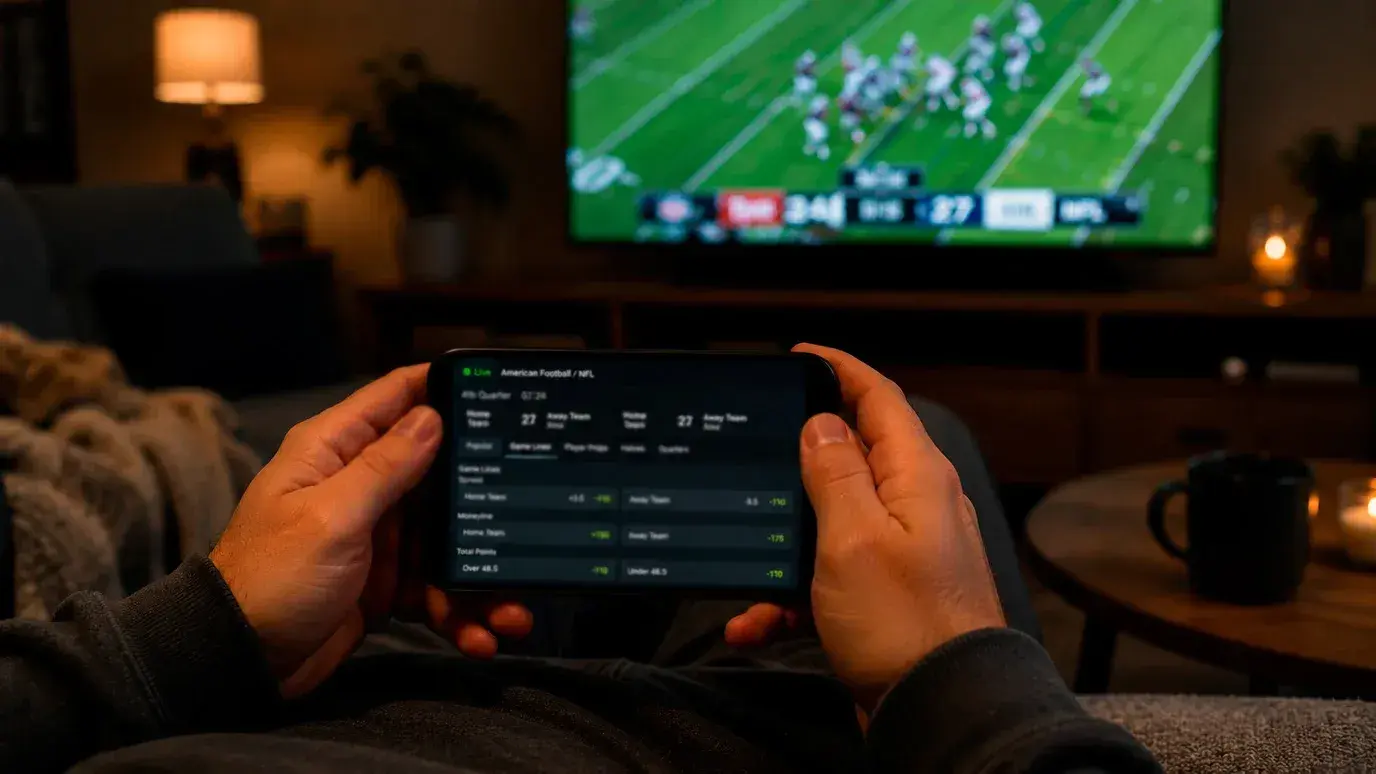
Twelve years ago, I placed my first NFL bet knowing almost nothing about American football. I picked the team with the better record, put a fiver on them to win, and watched the game from a pub in south London. They won. I collected eight pounds and change. The maths was not life-changing, but the experience was — suddenly, a sport I had never followed felt personal. That moment is the reason I now spend my working life analysing NFL betting markets.
The UK now has 14.3 million NFL fans — nearly one in five people in the country. If you are reading this, you are probably one of them, or you are curious enough to want to be. Either way, this guide assumes zero betting experience and zero American football expertise. By the end, you will know how to set up an account, place your first bet, and avoid the mistakes that cost beginners money before they even understand the sport.
Setting Up a UKGC-Licensed Account
When Andrew Rhodes, the UK Gambling Commission’s chief executive, discussed recent survey findings, he emphasised understanding consequences and risk profiles among frequent gamblers. That regulatory focus means the account-opening process in the UK is more involved than it was five years ago — but every step exists to protect you, and understanding why helps.
To open a betting account, you need to be 18 or older, provide a valid form of photo ID (passport or driving licence), and give a UK address that can be verified. Most UKGC-licensed platforms complete this verification electronically within minutes using credit reference data — you will not usually need to upload documents unless the automated check flags an issue.
Since February 2026, UK operators run affordability checks starting at a net loss of 150 pounds per month. About 95% of these initial checks are “frictionless,” meaning they happen in the background without interrupting your betting. You will not notice them unless your losses exceed the threshold, at which point the operator may ask for income verification. This is not a penalty — it is a safety mechanism designed to ensure bettors are not spending beyond their means.
One practical tip: set deposit limits when you create your account. Every UKGC-licensed platform is required to offer daily, weekly, and monthly deposit caps. Setting a limit before you start removes the temptation to chase losses later. I still use deposit limits myself, and I have been doing this for over a decade.
Placing Your First NFL Bet: A Walkthrough
Your first bet should be simple. I recommend a moneyline wager — picking which team wins — on a Sunday afternoon game. Here is the step-by-step process on any standard UK platform.
Open the app or website and navigate to “American Football” or “NFL” in the sports menu. Select an upcoming game. You will see three main markets: moneyline (or “match result”), point spread (or “handicap”), and total points (or “over/under”). Tap the moneyline option next to the team you want to back. The selection appears on your bet slip, usually at the bottom of the screen on mobile.
Enter your stake — the amount you want to bet. The slip will show your potential return, which is your stake multiplied by the odds. If the odds are 4/5 and you stake five pounds, your potential return is nine pounds (five-pound stake plus four pounds profit). Confirm the bet. That is it.
Your bet settles when the game finishes. If your team wins, the return is credited to your account automatically. If they lose, the stake is gone. There is no partial win on a moneyline — it is binary.
Do not be tempted to place multiple bets on your first day. One bet, one game, a small stake you are comfortable losing. Watch the game, pay attention to how it feels to have something riding on the result, and decide afterwards whether it is something you want to continue with.
Five Concepts to Know Before Your First Bet
You do not need to memorise a glossary to start betting on the NFL, but five concepts will save you from the most common beginner confusion. I learned each one the hard way; you do not have to.
The spread is a handicap. If a team is listed at -3.5, they need to win by 4 or more for a spread bet to pay. If you see +3.5, that team can lose by up to 3 points and your bet still wins. Think of it as a head start given to the weaker team.
Odds represent probability and payout. Fractional odds of 2/1 mean you win two pounds for every pound staked. The shorter the odds, the more likely the bookmaker thinks the outcome is — and the less you win. A full breakdown of how NFL odds work in all three formats is worth reading once you are comfortable with the basics.
Bankroll is your total betting budget. Decide on an amount before the season starts and stick to it. A common guideline is to risk no more than 1-2% of your bankroll on a single bet. If your bankroll is 200 pounds, that means two to four pounds per wager. It sounds small. It is meant to.
Value is the gap between what you think will happen and what the odds suggest. If you believe a team has a 50% chance of winning but the odds imply only a 40% chance, there is value on that team. Betting on value — not on who you think will win — is the foundation of profitable wagering. Most beginners bet on outcomes they “feel” will happen. Experienced bettors bet on prices that are wrong.
Cash out lets you settle a bet early, taking a guaranteed return before the event finishes. The amount offered is always less than the potential full payout, but it locks in profit (or limits loss) when circumstances change mid-game. It is a useful tool, but treat it as a strategic option rather than a panic button.
Five Mistakes New NFL Bettors Make
Around 10% of UK adults bet on sport online, and the majority of first-time NFL bettors repeat the same errors. These are the five I see most often in the communities I follow.
Betting too much too soon. The excitement of a new market makes people overstake. Your first NFL season is an education, not a profit centre. Keep stakes at the absolute minimum until you have a full season of experience.
Following social media tipsters blindly. NFL Twitter and TikTok are full of people posting winning bet slips. They do not post the losses. No one selling or sharing NFL tips has a track record that survives scrutiny over a full season. Build your own views; do not outsource them.
Ignoring time zones. NFL games kick off between 6 PM and 1:30 AM UK time. Betting on a Monday Night Football game at 1:15 AM when you are half-asleep leads to impulsive decisions. Set your bets before the evening and step away from the app.
Chasing losses within the same game window. A bad 6 PM result does not make the 9:25 PM game a recovery opportunity. Each bet stands alone. The money lost on the first game is gone regardless of what happens next.
Neglecting responsible gambling tools. Deposit limits, session time reminders, and reality checks exist on every UK platform. Using them is not a sign of weakness — it is standard practice for anyone who wants to bet sustainably. If at any point the experience stops feeling like entertainment, GamCare and GambleAware offer free, confidential support.