

The NFL regular season spans 18 weeks, with each team playing 17 games and receiving one bye week. That structure creates a calendar where not every game is played on equal footing. Some teams enter a week with ten days of preparation; others have four. Some have travelled across time zones; others played at home. The average NFL regular-season audience of 18.7 million viewers per game is drawn to a sport where parity is the central design principle—but the schedule itself introduces asymmetries that the betting market does not always price correctly.
This guide covers the three scheduling factors that most directly affect betting lines: bye-week rest advantages, short-week fatigue, and the UK-specific timing of NFL game windows.
Teams Coming Off Bye: How Rest Affects Performance
A bye week gives a team 13-14 days between games instead of the standard 7. That extra week means more recovery time for injured players, more preparation time for the coaching staff, and a mental reset after the grind of consecutive weeks. The betting market accounts for the bye-week advantage, typically building 0.5-1 point into the spread for the team coming off rest. The question is whether that adjustment is sufficient.
Historical data suggests the bye-week advantage is real but modest—and it interacts with other factors in ways that make blanket statements unreliable. A team coming off a bye at home, in a divisional rivalry, against an opponent on a short week is in a substantially stronger position than a team coming off a bye on the road, against a rested opponent, in a non-conference game. The bye itself provides the advantage; the context determines how large it is.
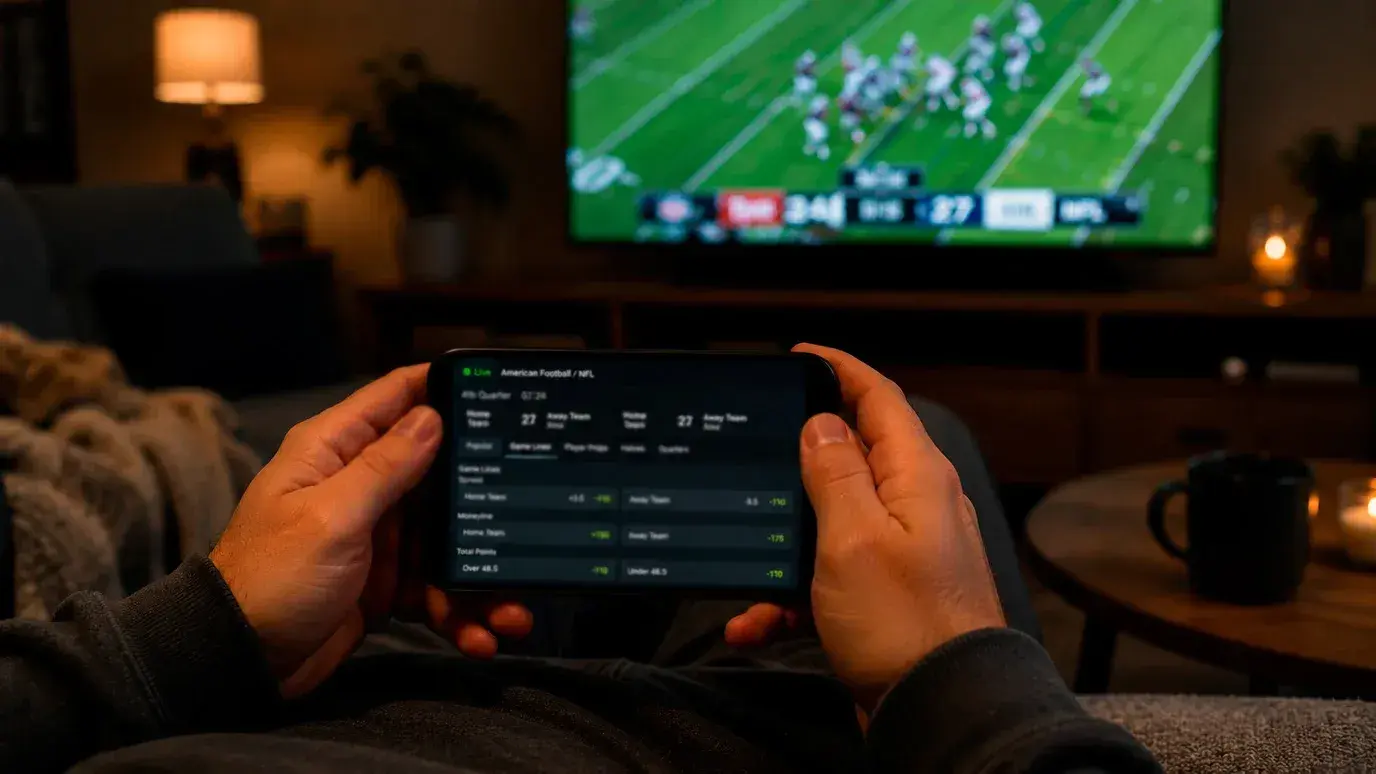
Bettors who wager on NFL games watch roughly 19 more games per season than non-bettors, and that additional viewing creates familiarity with how teams perform after rest. I track post-bye performance separately in my records, focusing on three metrics: ATS record, scoring differential versus the closing total, and turnover margin. Over the past five seasons, post-bye teams have covered at a rate slightly above 50%, which suggests the market prices the advantage reasonably well in aggregate but leaves room for game-specific edges.
The most actionable bye-week angle is the matchup between a team coming off a bye and a team on a short week (Thursday-to-Sunday, or worse, Monday-to-Sunday). The rest differential in that scenario is not 7 days versus 14; it is 4-5 days versus 14. That gap is large enough to affect physical performance, particularly for teams with older rosters or significant injury lists.
Short-Week Games: Thursday Night and the Fatigue Factor
Thursday Night Football requires teams to play on four days’ rest following a Sunday game. The preparation time is compressed: one day to recover, one day to install the game plan, and one day to practice before travelling. For a sport as physically demanding and schematically complex as the NFL, that timeline is brutal.
The scoring data on Thursday Night Football shows a slight lean toward unders, which aligns with the expectation that fatigue reduces offensive execution. Tired receivers run imprecise routes, tired offensive linemen miss blocking assignments, and tired quarterbacks process information more slowly. Defences, which rely more on effort and physicality than schematic precision, tend to hold up better on short rest than offences do.
The market has caught on to the Thursday Night under trend in recent years, and the totals on TNF games now open lower than equivalent matchups would on Sunday. Whether the adjustment is sufficient depends on the specific teams. A team with a deep roster and a run-first offence handles short rest better than a team with a thin roster and a pass-heavy scheme, because running plays are less mentally demanding to execute and the physical toll is spread across more personnel groupings.
Monday-to-Sunday turnarounds are less discussed but carry similar fatigue dynamics. A team that plays on Monday night and then faces a Sunday afternoon kickoff six days later is at a disadvantage compared to an opponent that played on the previous Sunday and had a full week. The market typically adjusts for this, but the adjustment is smaller than for Thursday Night games because the schedule gap is less extreme.
NFL Game Windows and UK Betting: Sunday Early, Late and Night
The NFL schedule divides Sunday into three kickoff windows: early afternoon (6 PM UK time), late afternoon (9:05 or 9:25 PM UK time), and Sunday Night Football (1:20 AM Monday UK time). Thursday and Monday night games add two more windows, both starting after 1 AM UK time. In 2026, the league has scheduled a record nine international games, with three in London kicking off at local afternoon times—the only NFL games that start during UK daytime hours.
For UK bettors, the 6 PM Sunday window is the most accessible and the most liquid. The largest number of games kick off simultaneously, which means the broadest range of markets and the tightest odds. Pre-match betting volume peaks in the hours before this window, and in-play markets are deepest during the early Sunday afternoon games.
The late Sunday window (9:05-9:25 PM) features two or three games, including the week’s marquee matchup. Betting volume remains strong through this window because the hour is still reasonable for UK viewers. The strategy guide covers how to approach multi-window Sundays, but the key principle is straightforward: do not let a bad result in the early window push you into impulsive bets on the late games.
Sunday Night and Monday Night Football at 1:20 AM UK time are where discipline matters most. The games are high-profile, the betting markets are deep, and the temptation to stay up and bet in-play is strong. But decision quality degrades with fatigue, and the odds available at 2 AM are set by a market that is wide awake in the US. You are betting at a cognitive disadvantage against a market that is not.
Schedule Release: How Early Lines React to Matchup Reveals
The NFL releases the full regular-season schedule in mid-May, and the betting market responds within hours. Look-ahead lines—preliminary spreads posted for every game in the season—appear on some platforms within 24 hours of the schedule release. These lines are intentionally loose, with wide margins and limited stakes, because they are designed to gauge market sentiment rather than to handle serious volume.
The value in look-ahead lines is narrow but real. If you have done off-season research—tracking roster moves, free-agency signings, coaching changes, and strength-of-schedule projections—the look-ahead period offers prices that have not yet been refined by months of market activity. A game that looks like a mismatch on paper in May might be priced as a pick-em in September after injuries and in-season developments reshape the teams.
I place a small number of look-ahead bets on games where my off-season model produces a spread that differs from the market by 3 or more points. The hit rate on these is not spectacular, because five months of new information can invalidate the thesis entirely. But the potential payoff on games where the thesis holds and the market moves toward my number justifies the small allocation. The key is sizing: look-ahead bets should represent a fraction of your standard unit, reflecting the uncertainty inherent in betting on games that are months away.