
I once watched a game finish 6-3 in a downpour, and the total had been set at 46.5. The under hit by 37 points. That extreme result was predictable to anyone who checked the weather forecast and knew that both offences relied heavily on the passing game. Totals betting is the NFL market where preparation matters most, because the number is not about who wins — it is about how the game plays out, and that is driven by factors you can research before the odds even move.
The NFL saw $30 billion wagered through licensed US operators in 2025, and totals markets absorb a substantial portion of that handle. For UK punters, over/under bets sit alongside the moneyline and spread as one of the three core NFL markets, and they are often the easiest to find value in because casual bettors overwhelmingly focus on sides rather than totals.
How NFL Totals Are Set and What They Mean
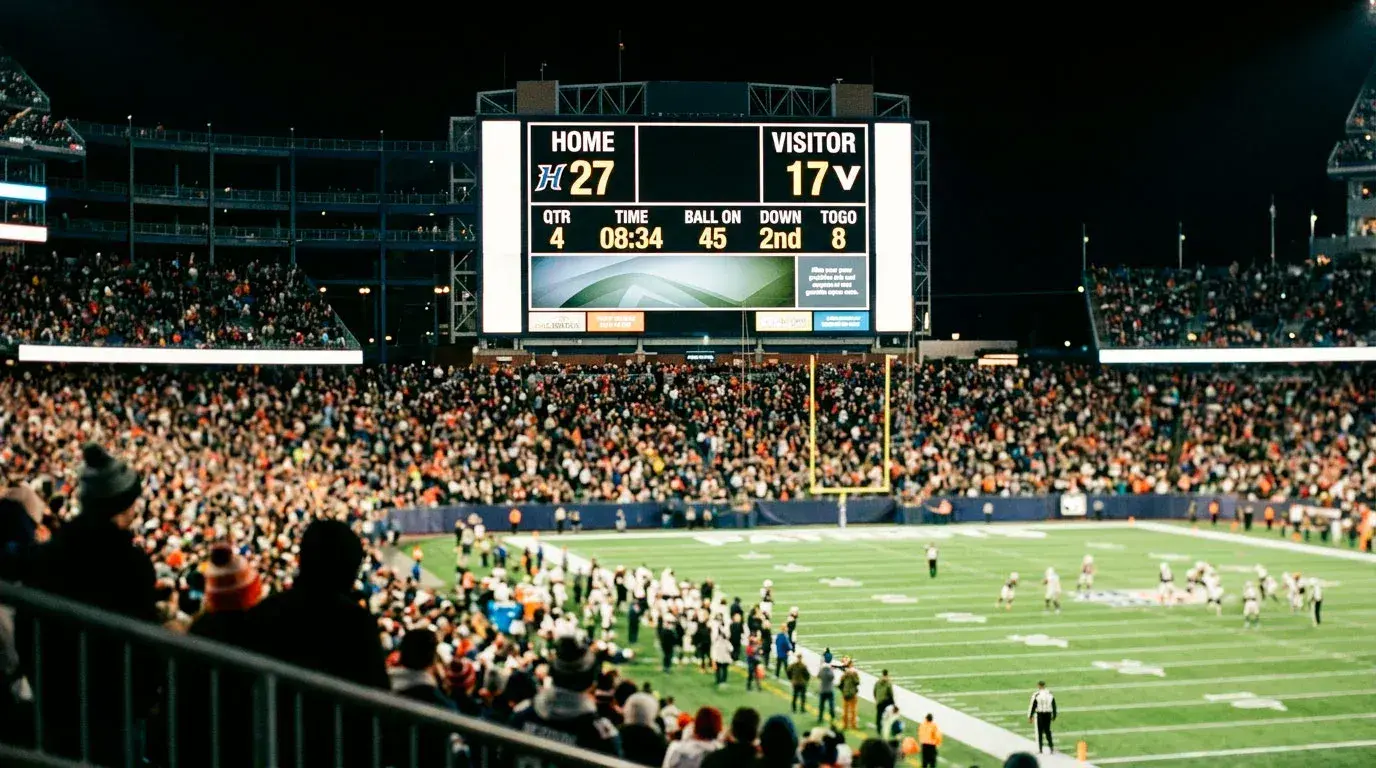
A total — also called the over/under — is a single number representing the bookmaker’s projected combined score for both teams. If the total is set at 47.5, you bet whether the actual combined score will be over or under that number. The half-point eliminates pushes, so there is always a result.
Bookmakers set the opening total based on offensive and defensive efficiency metrics, pace of play, historical scoring averages for the matchup, and venue. A game between two top-10 offences in a dome might open at 52.5, while a matchup between two run-heavy, defence-first teams in an outdoor northern stadium could open at 38.5. The range in the NFL is wide — I have seen totals as low as 35 and as high as 56 in recent seasons.
Odds on each side typically sit near even money: 10/11 or 5/6 in fractional, reflecting the bookmaker’s margin. Unlike moneylines, where the favourite and underdog have asymmetric odds, totals are priced symmetrically because public betting volume on the over roughly matches the under in most games. When sharp money moves one side, the bookmaker adjusts the total itself rather than the odds — shifting from 47.5 to 48 or 47, for instance.
Factors That Move NFL Totals: Weather, Pace and Personnel
Weather is the single biggest variable I track for totals, and it is consistently underpriced in the market. Wind above 15 mph suppresses passing offences, which drive the majority of NFL scoring. Cold temperatures below minus-five Celsius reduce grip on the ball and slow player movement. Rain and snow increase turnovers and shorten drives. I have a standing rule: any outdoor game with sustained winds above 20 mph automatically gets an under look, regardless of the offensive talent on the field.
Pace is the second factor. Some teams run more plays per game than others, and more plays mean more scoring opportunities. An up-tempo offence like one that regularly runs 70-plus plays per game inflates totals in games it plays, while a ball-control rushing attack that runs 55 plays per game compresses them. The total should reflect the expected pace of the specific matchup, not just the average scoring of each team in isolation.
Personnel changes mid-season move totals sharply. A starting quarterback going down to injury can drop a total by 3-5 points overnight, depending on the gap between the starter and the backup. The average regular-season audience of 18.7 million viewers per game means these injury announcements are priced in quickly on high-profile teams but more slowly on smaller-market franchises — a window that weather and venue factors can extend.
The last factor worth tracking is defensive matchups at the schematic level. A defence that ranks top-five against the pass but bottom-ten against the run will suppress totals against pass-heavy offences but inflate them against run-based teams. Generic “defence is good” thinking misses this nuance, and it is where the sharpest totals edges live.
Team Totals: Betting One Side of the Scoreboard
Most UK platforms now offer team totals — a line for each team’s individual score rather than the combined total. This market is a significant upgrade for analytical bettors because it isolates the question. Instead of asking “will both teams combine for over 47 points?” you ask “will the Bills score over 26.5 points?”
Team totals are particularly useful when you have a view on one offence but not the other. If a top-tier offence faces a mediocre defence, the team total over makes sense even if the opposing team’s scoring is unpredictable. The game total might be clouded by uncertainty on the other side, but the team total lets you express a clean opinion.
One subtlety: team totals are derived from the game total and the spread, not priced independently. If the game total is 47.5 and the spread is -3.5, the favourite’s implied team total is roughly 25.5 and the underdog’s is roughly 22. This means team totals move in lockstep with the game total and the spread. If you have already bet the game total over and then bet a team total over on the same game, you are doubling your exposure to scoring, which may or may not be intentional.
Totals Strategy: When Overs and Unders Have an Edge
Bettors who wager on NFL games watch approximately 19 more games per season than non-bettors, and that additional viewing creates a bias: people who watch a lot of football tend to remember high-scoring games more vividly than defensive grind-outs. The result is a persistent public lean toward overs, especially in primetime games and marquee matchups.
This over bias creates systemic value on unders in specific situations. Divisional games late in the season, where both teams know each other’s tendencies, tend to go under more often than the market predicts. Games with short rest — Thursday Night Football especially — see suppressed scoring because preparation time is limited and player fatigue is higher. Cold-weather December and January games in outdoor stadiums historically trend under as well.
Overs have their spots too. Games between two bottom-10 defences in dome stadiums tend to exceed the total, especially when the line has not fully adjusted for the defensive weaknesses. The market sometimes under-adjusts for garbage-time scoring — a blowout might see the winning team rest starters while the losing team scores late touchdowns that inflate the final combined score past the total.
Bill Miller of the AGA described the Super Bowl as the event that brings fans together unlike any other, and that communal energy pushes Super Bowl totals in a specific direction: the public hammers the over on the biggest game of the year, creating value on the under when the game features elite defences. The last several Super Bowls have gone under at a rate that suggests the market consistently overestimates scoring in the championship game.