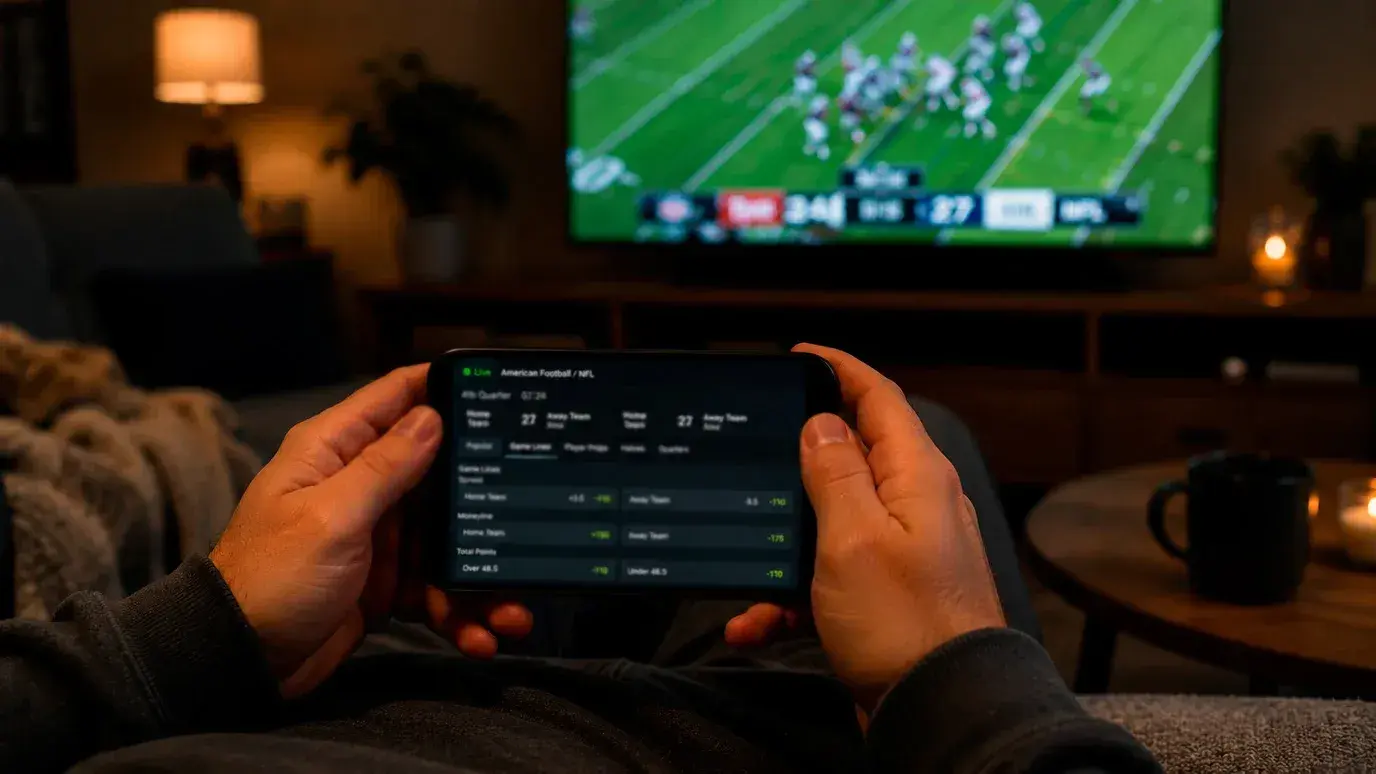


Roughly 2.7% of UK adults—approximately 1.4 million people—meet the clinical threshold for problem gambling. That figure has remained stable since 2023, but stability in an aggregate number masks the reality that individuals move in and out of risk categories, often without recognising the transition. The NFL season, with its 18-week regular season, playoff stretch, and Super Bowl finale, creates a five-month period of sustained betting opportunity that can accelerate harmful patterns in ways that shorter sporting events do not.
I write about NFL betting strategy because I believe informed wagering is more enjoyable and more sustainable than uninformed wagering. But strategy means nothing if the activity itself is causing harm. This guide covers the tools available to UK NFL bettors for self-assessment, the support services that exist when those tools indicate a problem, and the practical steps you can take to keep NFL betting in its proper place.
The PGSI Self-Assessment: Checking Your Risk Level
The Problem Gambling Severity Index is a nine-question screening tool used internationally to assess gambling-related harm. Each question asks about a specific behaviour or consequence—betting more than you can afford, feeling guilty about gambling, chasing losses—and is scored from 0 (never) to 3 (almost always). The total score places you in one of four categories: non-problem (0), low-risk (1-2), moderate-risk (3-7), or problem gambler (8+).
Among 18-24-year-olds in the UK, 21.9% score at least 1 on the PGSI, meaning they exhibit some level of gambling-related risk. Within that group, 5.3% fall into the high-risk category of 8-27. These figures should concern anyone who bets on the NFL, because the demographic most engaged with American football in the UK—young men who follow the sport through social media and streaming—overlaps significantly with the demographic showing the highest risk indicators.
The PGSI is not a diagnostic tool—it does not tell you whether you have a gambling disorder. It is a screening instrument that indicates your level of risk and whether you should seek further assessment. I recommend completing the PGSI honestly at three points during the NFL season: before Week 1, at the midpoint of the regular season, and after the Super Bowl. Comparing your scores across these checkpoints reveals whether your relationship with betting is stable or deteriorating.
One important nuance: a score of 1-2 does not mean you have a problem. It means you have exhibited behaviour that correlates with risk, and it is worth examining that behaviour consciously. Did you chase a loss during a bad Sunday? Did you bet more than planned because a tip looked compelling? A single instance does not define a pattern, but awareness of the behaviour is the foundation of responsible gambling.
GamCare Support for NFL Bettors: What’s Available
Nearly 2,000 people contacted GamCare’s Money Guidance Service in 2025—more than double the 923 who sought help in 2024. The total debt represented in those referrals was 7.2 million pounds. Zoë Osmond, the CEO of GambleAware, described gambling as “highly addictive, with devastating impacts on people’s lives, relationships and financial stability,” while acknowledging that the rise in help-seeking may reflect growing awareness rather than growing prevalence alone.
GamCare operates a free, confidential helpline (available by phone and live chat) that offers immediate support for anyone experiencing gambling-related harm. The service is not restricted to people in crisis—if you are concerned about your betting patterns, uncertain whether your behaviour is within a healthy range, or simply want to talk through your NFL wagering with someone who understands the dynamics, the helpline is available.
Beyond the helpline, GamCare provides structured counselling through its network of treatment centres across the UK. The counselling is free, typically delivered in weekly sessions over 8-12 weeks, and is tailored to the individual’s specific gambling behaviour. For NFL bettors, this might involve examining the pattern of escalating stakes during the season, the emotional response to losses on late-night games, or the use of bonuses and promotions as justification for continued betting.
GambleAware funds additional treatment and research programmes, and its website hosts self-help resources, financial guidance, and links to local support groups. For bettors who are not ready to speak to someone directly, these resources provide a starting point for self-directed assessment.
Setting Deposit and Loss Limits for NFL Seasons
Every UKGC-licensed platform is required to offer deposit limits, loss limits, and session time limits. These tools are available in the account settings of every app and website, and since February 2026, affordability checks at the 150-pound net loss threshold add a regulatory layer on top of your personal limits.
I set my deposit limit before the NFL season starts, and I do not change it until the season ends. The limit is calculated simply: my total NFL bankroll for the season, divided by the number of months in the season (roughly five), gives me my monthly deposit cap. If my seasonal bankroll is 500 pounds, my monthly deposit limit is 100 pounds. This ensures I cannot accelerate spending during a losing streak by depositing additional funds impulsively.
Loss limits work differently from deposit limits. A deposit limit caps how much money you can move into your betting account; a loss limit caps how much you can lose before the platform restricts your activity. Setting both creates a two-layer protection: the deposit limit controls inflow, and the loss limit controls damage during a bad run. Not all platforms offer loss limits with the same granularity—some allow daily, weekly, and monthly settings; others only monthly.
The 24-hour cooling-off period for increasing limits is a critical design feature. If you have a losing weekend and want to raise your deposit limit to “win it back,” the 24-hour delay forces a pause. In my experience, the urge to increase limits passes within a few hours once the emotional sting of the losses fades. The cooling-off period saves more money than any betting strategy I have ever used.
Recognising Problem Betting Patterns During NFL Season
Emma Gibbons, a vulnerability lead working with debt referral services, observed that the rise in GamCare referrals reflects a growing number of people who feel overwhelmed and unsure where to turn after suffering losses. The NFL season’s structure creates specific patterns that can mask escalating behaviour.
The most common pattern I see in the betting communities I follow is gradual stake escalation. A bettor starts the season at 5-pound stakes, moves to 10 by Week 6 after a profitable stretch, and reaches 25 by Week 12 during a losing run. Each increase feels justified in the moment—”I’m up, I can afford it” or “I need to win back what I lost”—but the trajectory is unsustainable. If your average stake has doubled since the start of the season, that is a signal worth examining regardless of whether you are in profit or loss.
The second pattern is time creep. NFL games kick off between 6 PM and 1:30 AM UK time, and the sport rewards watching closely—in-play betting, live props, and cash-out decisions all depend on real-time engagement. A bettor who starts the season watching one or two games per weekend may find themselves routinely awake at 2 AM by November, with fatigue affecting both their betting decisions and their daily life. If you are losing sleep to watch NFL games specifically because you have money on them, the affordability checks in your account are monitoring your financial exposure, but no system monitors the toll on your health and relationships. That monitoring falls to you.
If any of this resonates, GamCare’s helpline and GambleAware’s resources are available without judgment, without cost, and without any requirement to stop betting if you do not want to. The purpose is support, not prohibition.